|
©The Archaeological Settlements of Turkey - TAY Project
|
|
|
|
|
|
Yortan / Gelenbe |
|
|
For site maps and drawings please click on the picture... 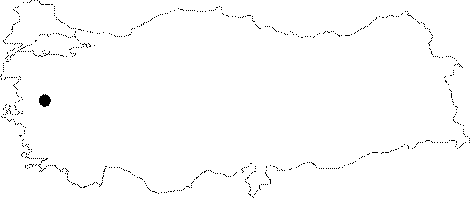 |
For photographs please click on the photo... 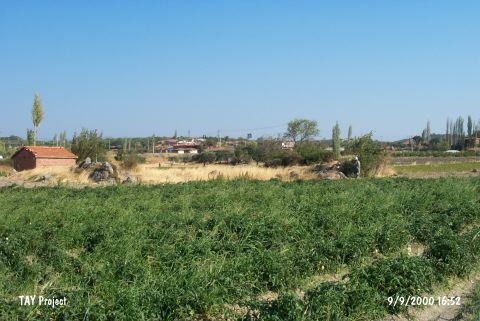 |
|
Type:
|
Cemetery |
|
Altitude:
|
132 m |
|
Region:
|
Aegean |
|
Province:
|
Manisa |
|
District:
|
Kirkagaç |
|
Village:
|
Bostanci |
|
Investigation Method:
|
Excavation |
|
Period:
|
EBA II EBA III |
|
|
|
  |
|
| Location: It lies within the territory of the Bostanli Village; south of the Gelenbe Sub-District; 16.5 km east-northeast of the Kirkagaç District of the Manisa Province and 55 km south of the Balikesir Province. To the west of it is the village of Karakurt and to the northwest Akkustepesi. |
| Geography and Environment: The area Yortan cemetery is located is a mountain near the Bakirçay Stream. Vast majority of the graves are located to south of the Gelenbe-Kirkagaç motorway. Although it is near the village of Gelenbe (sub-district at present); it is cited as Yortan in the archaeological literature. The findspot should be identified once again by the help of the local villagers. |
| History: |
| Research and Excavation: The excavation was started in 1900 by P. Gaudin; and continued in 1901 by V. Chapot. The excavators were; in fact; the engineers of the railway built in the vicinity. The finds were published in 1982 in detail by A. Kamil. |
| Stratigraphy: No information was provided about the stratification of the cemetery. |
| Small Finds: Human Remains: The excavations carried out for two seasons yielded 107/110 graves. Most of them are pithos graves found at ca. 1-1.5 m depth. A cist grave was uncovered; too. The opening of the most of the pithos graves are oriented toward the southeast while the others to the east and northeast. They were slightly leant. The big jars are thought to be for children or infants. The openings of the pithoi were capped with big flat stones. They usually house double burials while six burials were found in one of them. Grave Goods: The burials were usually accompanied with pottery left as grave goods. Also found are metallic finds; spindle whorls and limited number of marble idols. The potteries recovered from the graves were examined in three groups according to their dating by T. Kamil; Group A includes 244 finds of a total of 263. They are all handmade; black and gray burnished. As decoration; matt white paintings or filled in incision decorations were applied. Forms of bowls and jars are common. Group B is more elaborate compared to the group A. They are gray; light red or brown burnished. Some are thin washed. As decoration; deep channel decoration was applied. The vessels of Group C are wheel-made. Dark colors vanish. Long necked and spouted pitcher forms are common. Also introduced are double handled tankard forms. This group is dated to EBA IIIa. 36 pieces of spindle whorls were recovered from the graves. Only four of the idols are in marble. They are in three distinctive types. One is a violin-shaped idol specific to Beycesultan; two Troy I-II type flat; oval idols and one penguin-like (Cilia type). A greater portion of the latter is missing. Its head is suggested to be Cilia type [Dinç 1995:92]. All the metals recovered are made of arsenical copper. Only one spearhead contains tin. As finds; copper knife; rod handle pierced axe; spiral bracelets; pins; daggers; adzes and spearheads were recovered. Also found is an ornament in gold. |
| Remains: |
| Interpretation and Dating: The excavators conducted a sounding at Çavdartepe near the cemetery in order to find out the settlement of the cemetery; however no evidence was obtained. At the beginning of the 21st century; identical graves and finds uncovered in the vicinity (like Babaköy; Ovabayindir; etc.) were called as "Yortan Culture" following the excavations at Yortan cemetery. Yortan is dated to EBA I-III [Kamil 1982:52]; considered as contemporary of Troy. Hundreds of Yortan-style grave goods were sold to the museums in Turkey and in the world and to the private collectors after the excavation. They were; probably; not only from Yortan; but from some other cemeteries at Balikesir; Manisa and Usak provinces. A lot of graves were plundered by the local villagers and the treasure hunters. One of them is at Soma near Yortan. Another one destroyed during the railway construction in Balikesir was reported by K. Bittel [Bittel 1934:122 (Findspot No.17)]. |

