|
©The Archaeological Settlements of Turkey - TAY Project
|
|
|
|
|
|
Sapmaz Köy |
|
|
For site maps and drawings please click on the picture... 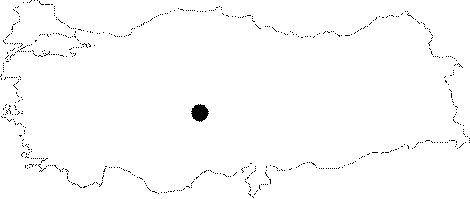 |
For photographs please click on the photo... 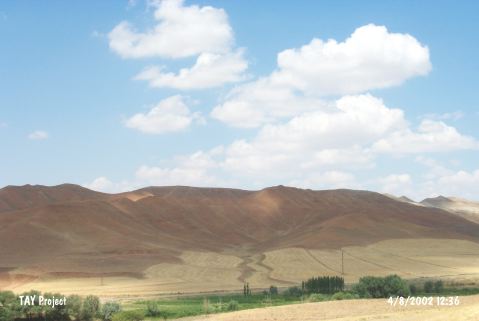 |
|
Type:
|
Mound |
|
Altitude:
|
1020 m |
|
Region:
|
Central Anatolia |
|
Province:
|
Aksaray |
|
District:
|
Merkez |
|
Village:
|
Sapmaz |
|
Investigation Method:
|
Survey |
|
Period:
|
Ceramic |
|
|
|
  |
|
| Location: This site lies 22 km northwest of the city of Aksaray; approximately 1 km southwest of the village of Sapmaz; on the northwestern side of road that leads to the village from the Aksaray-Antalya highway. The other name of the mound is Yassiören. In Omura's publication; the site is referred to as Yassiören [Omura 1991:71]. |
| Geography and Environment: The Sapmaz Köy Mound is approximately 3-4 m high and has a 250 m diameter. It lies on the flanks of the mountains east of the Salt Lake. There is a small stream that flows by. The mound is approximately 150-200 m higher than the Salt Lake water level. |
| History: |
| Research and Excavation: The site was discovered in 1965 during the surface survey in the area led by I.A. Todd. The finds discovered as a result of this survey were analyzed by Todd. Omura and his crew also conducted a surface collection at the site in 1989. |
| Stratigraphy: The surface collection conducted on the site yielded Ceramic Neolithic; Chalcolithic and Medieval material. Since no archaeological excavation has been conducted; the stratigraphic layers of the site are not known. It is reported that the mound itself and the surrounding region faced destruction. |
| Small Finds: Pottery: The Sapmaz Köy Mound yielded many typically Konya Plain Late Neolithic ceramic fragments. Since this red burnished fine ware spans a long period from the Late Neolithic the Late Chalcolithic; it is difficult to assign the pottery to a specific time period. Todd presents this ware found at Sapmazköy separately from Konya Plain ware [Todd 1980:53]. Chipped Stone: A total of 2;562 chipped stone tools and debitage products were collected from the mound. Most of these finds are obsidian. A biface axe; 138 pressure flaked blades; 21 points; 64 scrapers; a few perforators and burins and other tools were found [Todd 1980:92-93; fig. 34-35]. |
| Remains: |
| Interpretation and Dating: Todd believes this site is contemporaneous with the site of Çatalhöyük East. In ASPRO; it has been placed into the fifth period. Uncalibrated dates for this period are 8;000-7;600 BP. |

