|
©The Archaeological Settlements of Turkey - TAY Project
|
|
|
|
|
|
Kerhane Höyük |
|
|
For site maps and drawings please click on the picture... 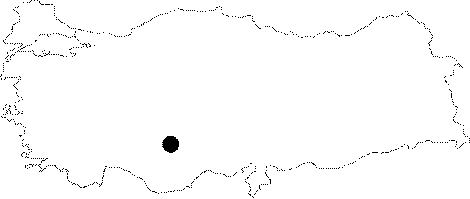 |
For photographs please click on the photo... 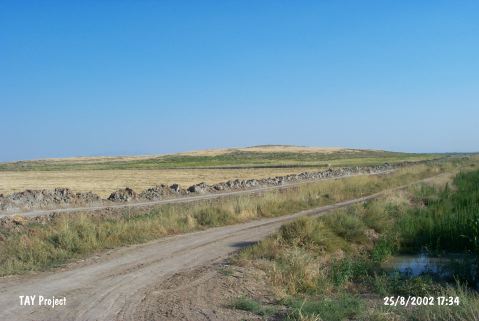 |
|
Type:
|
Mound |
|
Altitude:
|
1035 m |
|
Region:
|
Central Anatolia |
|
Province:
|
Konya |
|
District:
|
Karatay |
|
Village:
|
Hayiroglu |
|
Investigation Method:
|
Survey |
|
Period:
|
Ceramic |
|
|
|
  |
|
| Location: This site lies 37 km southeast of the city of Konya; 20 km north-northeast of the town of Çumra District and 8 km south of Yarma Town. North-northwest of the town is Hayirlioglu Village; southeast is Ovakavagi Village. |
| Geography and Environment: The mound is oval-shaped and has a 500x200 m base. It lies in the Konya Plain; in the flat area watered by Çarsamba Stream. Even in a 1:200;000 map; it is clear that the soil surrounding the mound is fertile. There used to be swamps/marshes (which have now been drained) in the area west of the mound. |
| History: |
| Research and Excavation: The site was discovered in 1958 during the surface survey conducted by J. Mellaart. It takes place in the registered archaeological sites list prepared by Ministry of Culture and Tourism. |
| Stratigraphy: The stratigraphy of the site has not been determined. The dating of the site is based on the surface survey. |
| Small Finds: Pottery: The finds such as the cream-colored; burnished ceramic fragments recovered during the surface survey conducted on the mound have been assigned to the Ceramic Neolithic Period. Such ceramics can be found at the site of Çatalhöyük East; Layers XIII-IX. |
| Remains: |
| Interpretation and Dating: Mellaart lists this site among Early Neolithic sites [Mellaart 1975:map on 56]. This assignment has also been followed in ASPRO where the site has been placed into the fifth phase and dated to 8;000-7;600 BP [Hours et al. 1994:201]. The Neolithic component of this site should be viewed with skepticism because of the lack of publications and research. Kerhane was revisited during the Konya Plain survey performed by D. Baird. Baird et al. found another one of the Neolithic Period obsidian arrowhead found by Mellaart on mound surface but due to the lack of sherd finds to support this date D. Baird does not accept that the mound should be dated to Neolithic Period [Baird 2002: 144]. |

